The Open Meeting Myth: Being Present Is Not the Same as Taking Part
Public meeting participation takes more than attendance. Learn how listening, speaking and written comments work, and what to try when each route falls short.
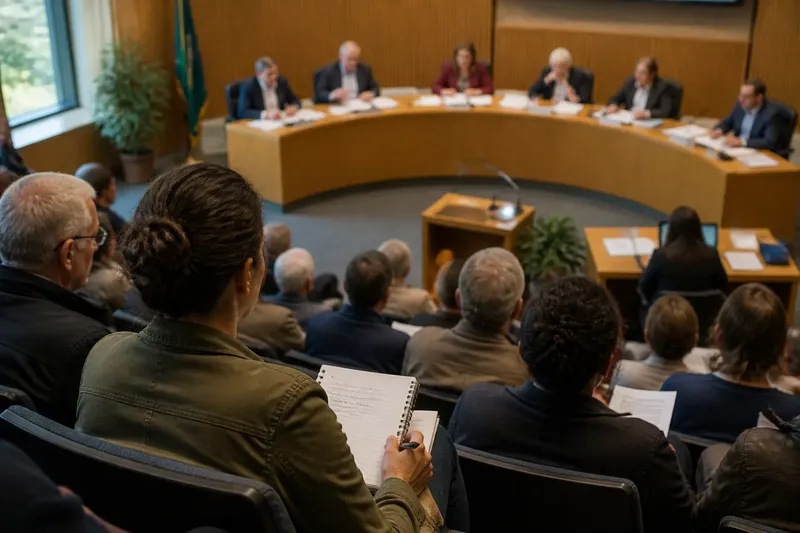
You sit through a council meeting, hear a decision discussed, then leave wondering whether anyone knew you were there. Public meeting participation can include listening, speaking or sending a written comment, but those routes do different jobs. Treating them as interchangeable is one reason people arrive with reasonable expectations and leave frustrated.
An open meeting offers access to a public process; it does not necessarily turn every attendee into a participant in every part of that process. The useful question is not simply whether you were present, but what kind of contribution the meeting accepts, when it accepts it and how that contribution is recorded.
Why can attendance feel like participation?
Meetings make public business visible. You can hear what officials discuss, observe how a chair manages the room and notice which concerns receive attention. That matters: listening can help you understand a proposal before deciding whether to respond.
But presence alone may leave no trace in the meeting record. A sign-in sheet might document attendance, while minutes might record only decisions and formal motions. Neither necessarily shows what you thought or whether you wanted to speak.
The distinction is like being in a room while a conversation takes place: you can hear it without being invited to contribute. In a public meeting, the invitation may come through a designated comment period, a submission process or a specific agenda item, rather than through the general fact that the doors are open.
What can go wrong when you only listen?
A common frustration is discovering that a concern was not considered because nobody formally raised it. People may assume that officials will infer their views from a full room, a quiet audience or a show of hands. Unless the meeting’s rules provide for that kind of signal, those impressions may not count as a recorded contribution.
Another problem is confusing information-gathering with decision-making. A public meeting may be a briefing, a committee discussion or a hearing; some sessions invite comments, while others do not. If you attend the wrong stage expecting a vote or an open microphone, the meeting can appear closed even when it is operating as scheduled.
Try this before attending:
- Check the agenda for the item you care about and note whether it is for information, discussion or a decision.
- Look for instructions on public comment, speaker registration or written submissions.
- Check whether comments are accepted before the meeting, during a set agenda slot or both.
- Ask the clerk or meeting contact how to make a contribution part of the official record.
That small check helps you choose whether to attend mainly to listen, prepare to speak or send a comment through another route. The chair’s directions and the meeting notice are usually more useful than assumptions based on how another public meeting worked.
Why might you be unable to speak?
People often arrive ready to talk and find that public comment has a sign-up deadline, a limited agenda window or a rule restricting comments to the subject under discussion. Sometimes a meeting is not the right forum for public remarks at all. These limits can feel personal, but they may reflect the format rather than a judgement about the speaker.
There can also be practical barriers: a packed agenda, an unclear sign-up process, difficulty travelling to the venue or a meeting time that conflicts with work or caring responsibilities. If speaking aloud is uncomfortable or inaccessible, a written route may be more suitable, provided the body accepts it and the deadline allows for it.
Try to identify the obstacle before deciding that there is no way to participate. Contact the clerk to ask about the speaking process, accessibility arrangements, remote attendance and alternative ways to submit a view. If a rule, deadline or accepted format depends on the relevant body’s instructions or local rules, follow those instructions rather than relying on a different meeting’s practice.
Say you want to comment on a proposed change to a neighbourhood play area, but the agenda says speakers must register before the meeting. You could contact the clerk to confirm the registration route, prepare a short point tied to the agenda item and submit a written comment as well if that route is accepted. The expected result is that you have a clear way to contribute, even if the chair cannot take an unregistered speech from the floor.
How can you make a spoken comment useful?
A speaking slot is not the same as a conversation. The chair may be collecting views rather than answering questions, and officials may not respond to each speaker immediately. A comment can still be useful if it makes a specific point that the decision-makers can understand and connect to the agenda.
Before the meeting, write down the issue, the reason it matters and the action or clarification you want. Keep the wording plain. If the agenda concerns a proposed change to a bus stop, for example, describe the particular access concern and ask for it to be considered; avoid using your limited time to recount unrelated grievances.
Listen to the chair’s instructions and respect the time limit if one is given. If you are unsure whether questions are allowed, ask the clerk beforehand. A concise comment is easier to record and harder to confuse with a request for an immediate exchange.
What happens to a written comment?
Submitting a comment does not automatically mean it will be read aloud, discussed at length or reproduced in full in the minutes. Written views may be circulated to members, summarised by officers or attached to a public record, depending on the process. Ask what happens to submissions and whether they must arrive before a stated deadline.
Make the subject line or heading specific, identify the agenda item and state your main point near the beginning. Include your name or contact details only as requested, and consider whether the submission will be public before sharing personal information. If the issue involves a private complaint or sensitive details, ask the relevant office which channel is appropriate rather than putting them into a public comment.
Keep a copy of what you send and note when and how it was submitted. If you receive an acknowledgement, that confirms receipt, not necessarily agreement or a change to the decision. If you hear nothing, a brief, courteous check with the clerk can clarify whether the submission arrived and how it will be handled.
What should you do when a meeting route falls short?
Sometimes the meeting ends without a clear answer, or the issue is deferred to another body. That does not mean your contribution was pointless, but it does mean you may need to find out where responsibility sits. Check the minutes or decision notice when they become available, then identify whether the next action belongs to a committee, service department or elected representative.
If you were not able to speak, ask whether written comments remain open or whether a later meeting will consider the item. If your comment was submitted but appears to have been missed, contact the meeting clerk with the agenda item, submission date and a copy of the message. Keep the request factual: ask how it was logged and whether it can still be considered.
Do not assume that repeating the same point at every meeting will make it more influential. A better next move may be to clarify the decision being sought, direct a service query to the responsible office or wait for a scheduled opportunity to comment. Each route serves a different purpose.
Which form of public meeting participation suits your aim?
Can listening count as participation?
Listening can help you understand the process, the arguments and the next opportunity to contribute. It may not, by itself, register your view or change the official record.
Does speaking at a meeting mean officials must respond?
Not necessarily. A public comment period may collect views without providing a direct reply, so check whether questions and responses are part of that meeting’s format.
Is a written comment as useful as speaking?
It can be, particularly when the meeting allows submissions and you want to explain a point clearly. Its handling depends on the submission rules, timing and how the body records written views.
What if I cannot attend in person?
Ask whether remote attendance, written submissions or another accessible route is available. Confirm the arrangements with the meeting contact rather than assuming that a livestream includes a way to take part.
How do you choose your next move?
Start with your aim. If you need to understand a proposal, attend and listen with the agenda in hand. If you want your view on the record, use the stated speaking or submission route. If you need an individual service response, contact the responsible service directly rather than relying on a general meeting comment.
Public meeting participation is more effective when you match the form of contribution to the job you want it to do. Presence gives you a view of the process; a spoken comment or written submission can make your position visible within it. Before you leave or press send, check one practical point: who will receive your contribution, and what can they do with it next?