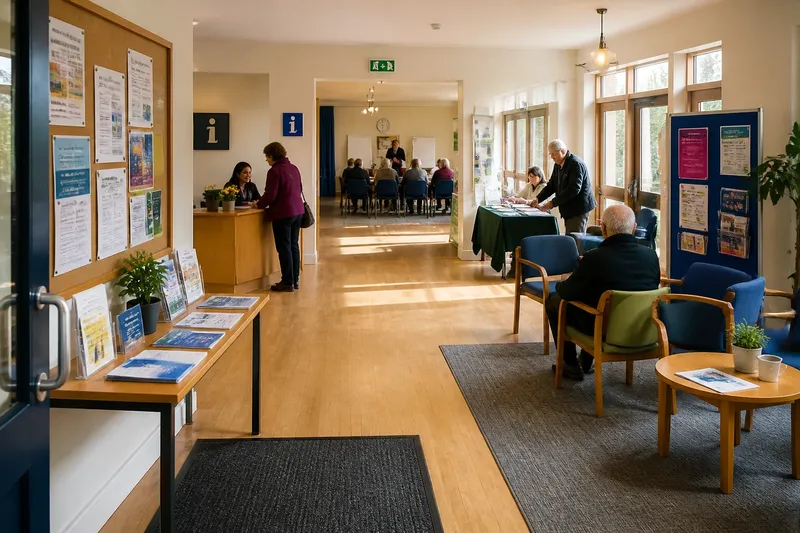
Library or Community Centre: What Each Is For
Library or community centre? Learn what each place is designed to offer, what services may overlap and how to check which local venue fits your need.

You need a quiet place to use a computer, but the library is closing before you finish work. The community centre nearby has a public room, though its noticeboard mostly lists classes and clubs. Knowing what each venue is for helps you choose without assuming one can simply replace the other.
A library or community centre may share rooms, run public events or lend equipment, but their central purposes differ. A library organises access to information and learning; a community centre makes space for local activities and services. In practice, a particular building may combine both roles, so check what it actually offers.
What is a library designed to provide?
A library’s core work is to connect people with information, reading and learning resources. That can include printed books, newspapers, children’s materials, digital collections, computers and help using them. Staff may also support visitors in finding reliable information or using library services, though the details vary between branches.
The collection matters because it is more than a feature of the room. Materials are selected, organised and made available for borrowing or on-site use. Catalogues, lending rules and staff knowledge help visitors find something specific or discover related material.
Libraries also support activities such as children’s story sessions, reading groups, language learning and digital-skills sessions. These activities generally connect to the library’s information and learning purpose. A meeting room or public event does not by itself make a library a community centre.
Think of the library as a well-organised toolbox: its value lies in the resources and help it makes accessible, not just in the building that holds them.
What is a community centre designed to provide?
A community centre is generally organised around local use of space and shared activity. Its rooms may host exercise classes, youth groups, advice sessions, celebrations, hobby clubs or meetings run by local organisations. The programme can change with demand, available staff and the groups that book the rooms.
Some centres also host services such as drop-in support, community meals or activities for older residents. Those services may be delivered by the centre, a council team, a charity or another local partner. Look for the name of the organiser as well as the venue: a service held there is not necessarily run by the centre itself.
Unlike a library collection, a centre’s main resource is often the ability to bring people together in a usable room. Booking arrangements, opening times and eligibility can shape what happens there. A centre may offer a quiet corner or a small book collection, but those features do not necessarily mean it provides the borrowing and information services of a library.
Where do their services overlap?
Both places may offer free public events, internet access, accessible rooms or sessions for children. Some share a building, and a council may describe a combined facility as a library and community hub. In those cases, the service list is more useful than the building’s name.
Overlap is easiest to understand by asking what the activity is meant to do. A workshop on using online public services might be hosted by either venue; in a library, it may be part of digital learning, while at a community centre it may sit within a wider programme of local support.
Room hire is another area where assumptions can mislead. A library might let a group use a meeting room under its own booking rules, while a centre may offer rooms for recurring classes or private gatherings. Check who can book, what the room is equipped for and whether staff support is included.
How can you tell which place fits your need?
Start with the outcome you want, then check the service rather than relying on a familiar sign over the door. A reader looking for a particular book needs a library catalogue or a staff enquiry; someone looking for a regular local activity may need a community centre timetable.
- For borrowing books or other materials: check the library catalogue, membership arrangements and branch availability.
- For quiet study or computer access: look for the library’s facilities and any rules for using desks, devices or printers.
- For a class, club or group: check community-centre listings, the organiser’s contact details and whether places must be booked.
- For a public appointment or advice session: identify the service provider, its access arrangements and whether the venue is only hosting the appointment.
- For a room to meet or hold an event: ask both venues about hire, permitted uses, equipment and availability.
Imagine you want help completing an online council form and would also like a place to work quietly afterwards. The library may offer computer access and digital support, while a community centre may host an advice session with a partner organisation. Check the session details and the library’s facilities separately; the two needs may point to different venues, even if both are nearby.
What should you check before setting off?
Opening hours can differ from the hours of a particular service. A building may be open while a staffed advice desk is closed, or a class may take place outside the centre’s usual public drop-in period. Confirm the time and location of the activity itself.
Access arrangements matter too. Check whether you need to register, book a place, bring identification or pay for a particular activity. If you need step-free access, a hearing loop, a quiet space or language support, contact the venue or service provider and ask about that specific provision.
When a service is run by another organisation, its own contact details can save a wasted visit. The venue can tell you where an event takes place, but the organiser is often best placed to explain referrals, appointment requirements or what to bring.
Which questions help distinguish the two?
Can a community centre lend books?
Some centres may keep books for visitors, but that does not necessarily mean they operate a lending library. Ask whether items can be borrowed, whether there is a catalogue and what return arrangements apply.
Can a library host community groups?
Many libraries host groups or make rooms available, subject to local rules and space. Check the branch’s booking information rather than assuming that a suitable room is available for every group or activity.
Where should I go for help using a computer?
Either venue may offer computer access or digital support, but the kind of help can differ. Check whether you need a device, guided assistance, an appointment or simply a public workstation.
What if a building calls itself a community hub?
“Community hub” often describes a shared site or local service centre rather than one fixed set of services. Look for separate listings for the library, room hire, advice sessions and partner organisations.
How can you check a shared or combined venue?
Read the venue’s service directory and identify which organisation provides each offer. A combined building can include a library desk, rooms managed by a community association and visiting services delivered by outside partners. Treat each listing as its own service, with its own contact route and access conditions.
If the website is unclear, call the venue or use its published enquiry channel. Ask a focused question, such as whether the library lends the item you need or whether a named advice session accepts walk-ins. For a library or community centre, that small distinction can make the difference between arriving at the right door and finding only a room where the service sometimes takes place.